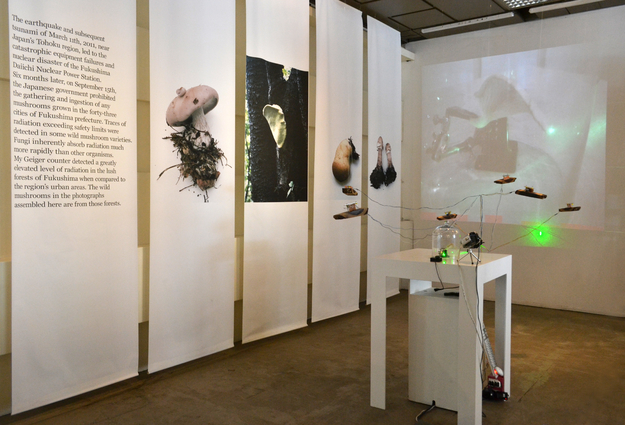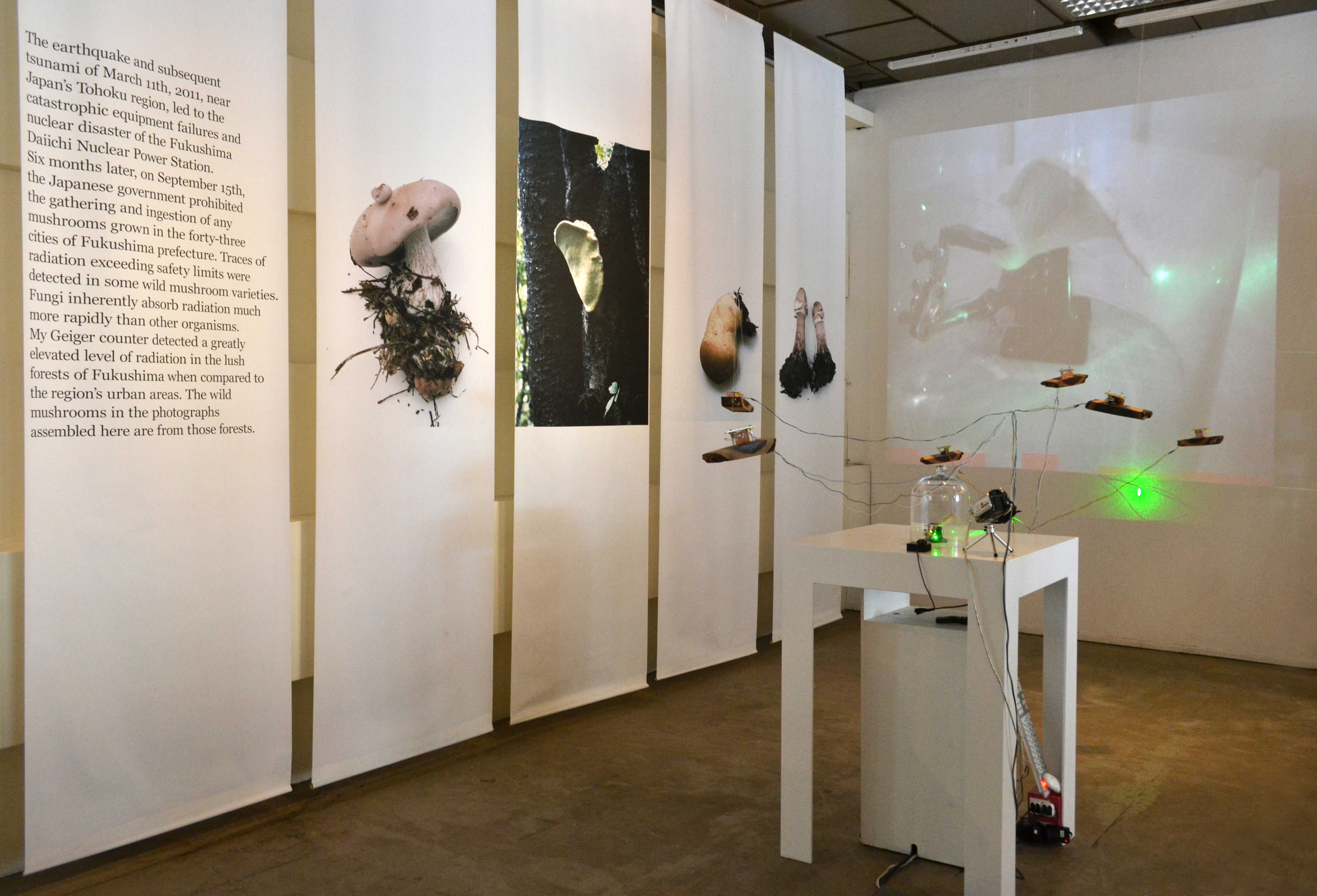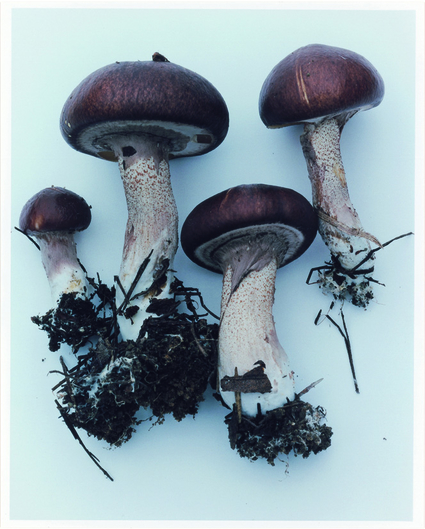
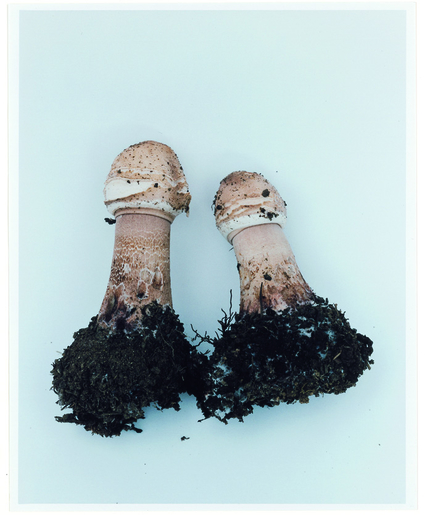
Last fall, Japanese photographer Takashi Homma ventured into the Fukushima forests with a Geiger counter in hand and a local guide. He picked about 100 specimens of mushrooms and set up a mini-photo studio right inside the woods to capture his findings.Since fungi easily absorb radiation, the radiation levels in mushrooms is a good indicator of the conditions of the surrounding soil, air, and water.
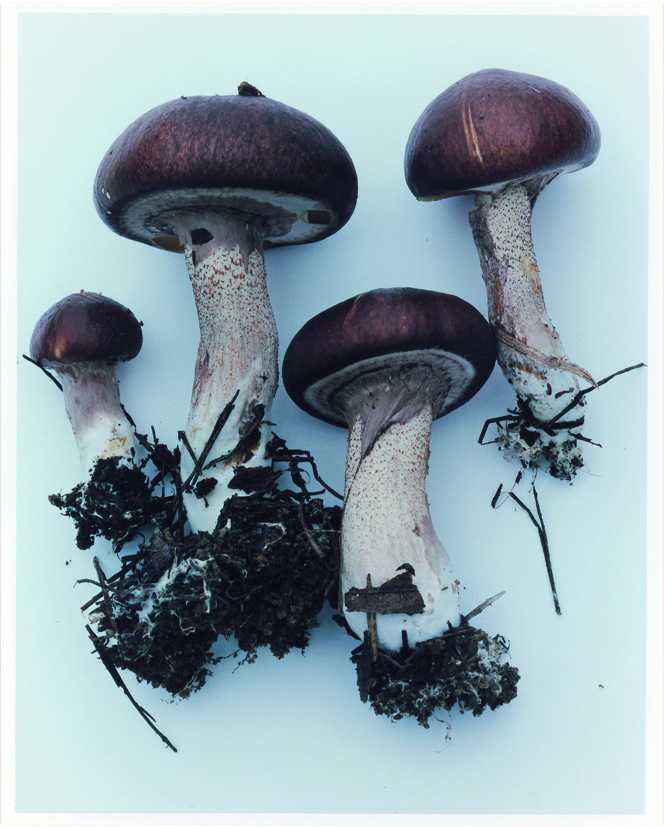
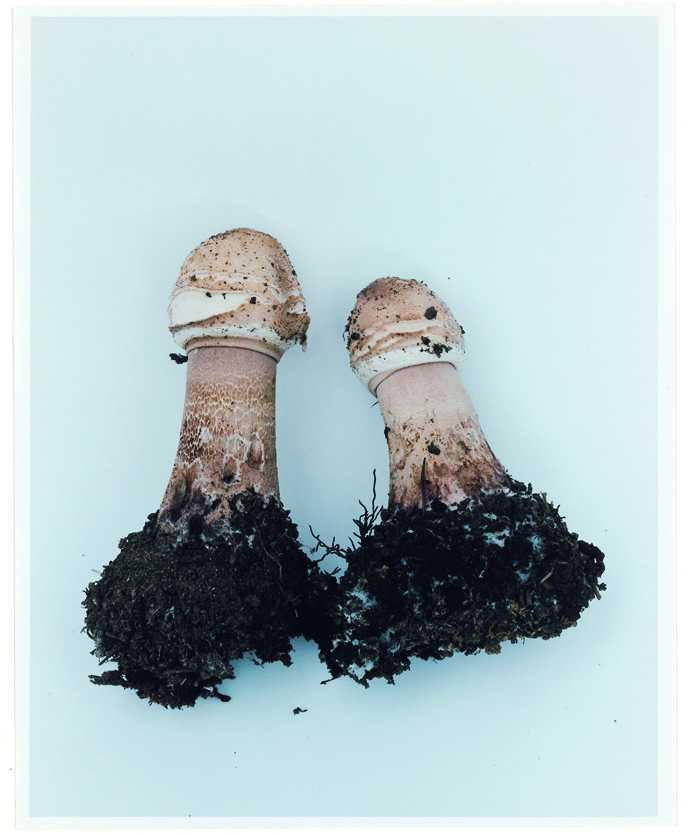
As the end note of his book of photographs reads:
"The earthquake and subsequent tsunami of March 11th, 2011, near Japan’s Tohoku region, led to the catastrophic equipment failures and nuclear disaster of the Fukushima Daiichi Nuclear Power Station. Six months later, on September 15th, the Japanese government prohibited the gathering and ingestion of any mushrooms grown in the forty-three cities of Fukushima prefecture. Traces of radiation exceeding safety limits were detected in some wild mushroom varieties. Fungi inherently absorb radiation much more rapidly than other organisms. My Geiger counter detected a greatly elevated level of radiation in the lush forests of Fukushima when compared to the region’s urban areas. The wild mushrooms in the photographs assembled here are from those forests."
Radioactive mushrooms - Mushrooms from the forest, by a Japanese photographer Takashi Homma.