SensorMania
Notes from the e-Fashion day
Interactive fashion needs technology. If we want our clothes to move, sense and light up, then we will need the materials to do this for us. There are a lot of very interesting materials out there, but their engineers may never have considered them as possible fashion fabrics. Mostly their purpose is more industrial- shielding, antibacterial or other such practical things.
With:
Leah Buechley, who designed the sewable version of the Arduino microcontroller, is fascinated with materials, and especially with using them for interactive projects close to her body. She was in Amsterdam for one day, and during that day she presented a circus of some of the cooler sensors and actuators she has been working with lately. Stretch, bend and press sensors, conductive thread, velcro and rubber, and much more.
-
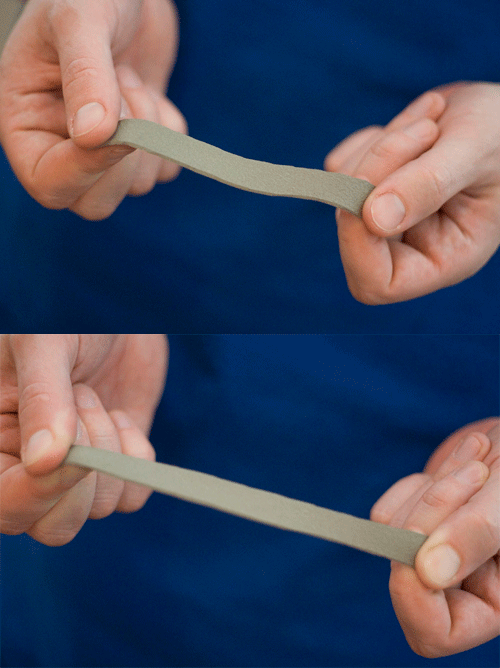
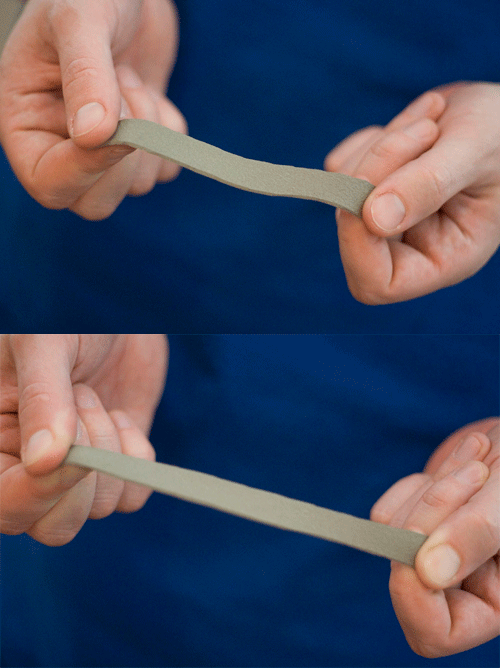
One of the most amazing things she brought with her was some grey rubber which you could switch into conductive mode by pressing or stretching to flatten.
-
Stretch-activated conductive rubber-
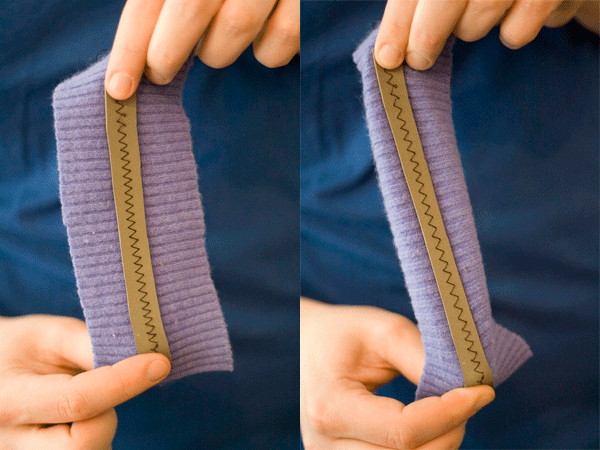
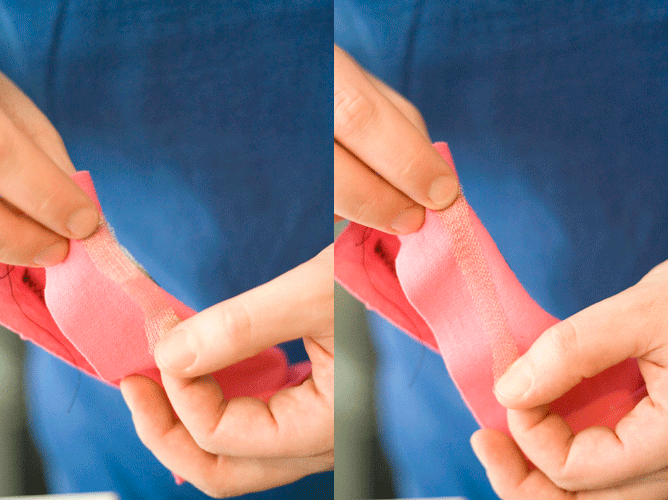
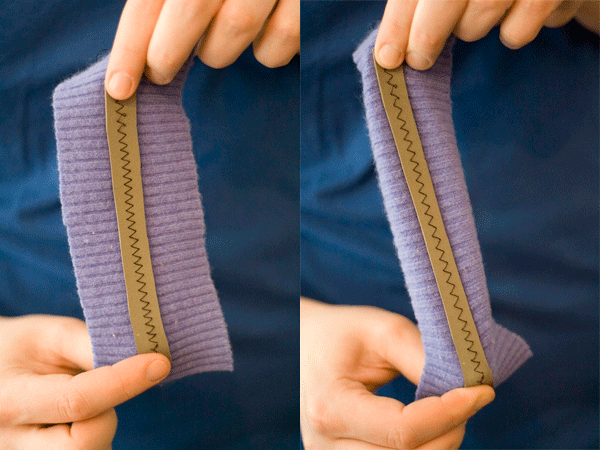
Pressure activated conductive rubber The rubber is also available in a constantly conductive form which requires no stretching or pressure to conduct, but it remains very stretchy. It can be sewn into jersey or other stretchy materials.
-
Leah also uses short conductive rubber ropes which work the opposite way: as they are stretched, their resistance increases. She has put them into dancer's suits at the elbows and knees, which then can sense the flexing of the joints.
-
Besides the stretchy ropes, flexing can also be measured by flex sensors which change their resistance based on the actual bending. They can only bend some 100 times before they break, but they work nicely for less active areas.
-
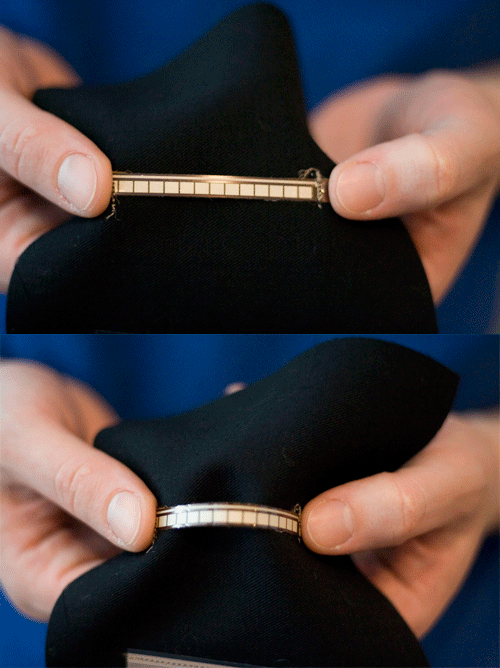
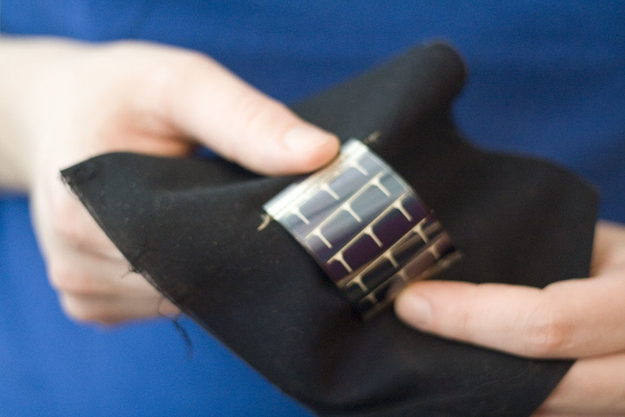
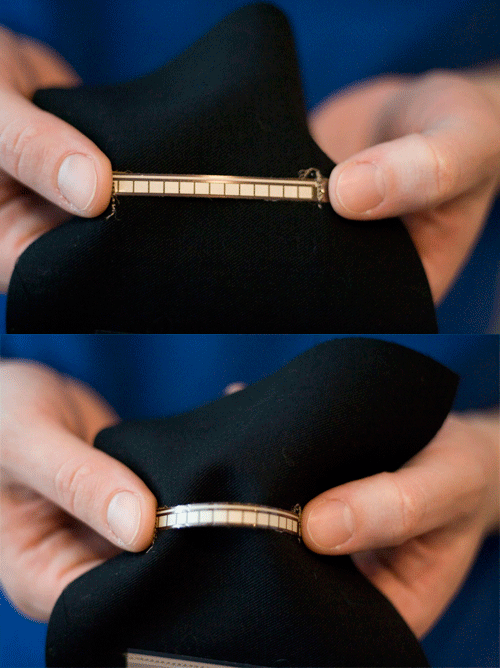
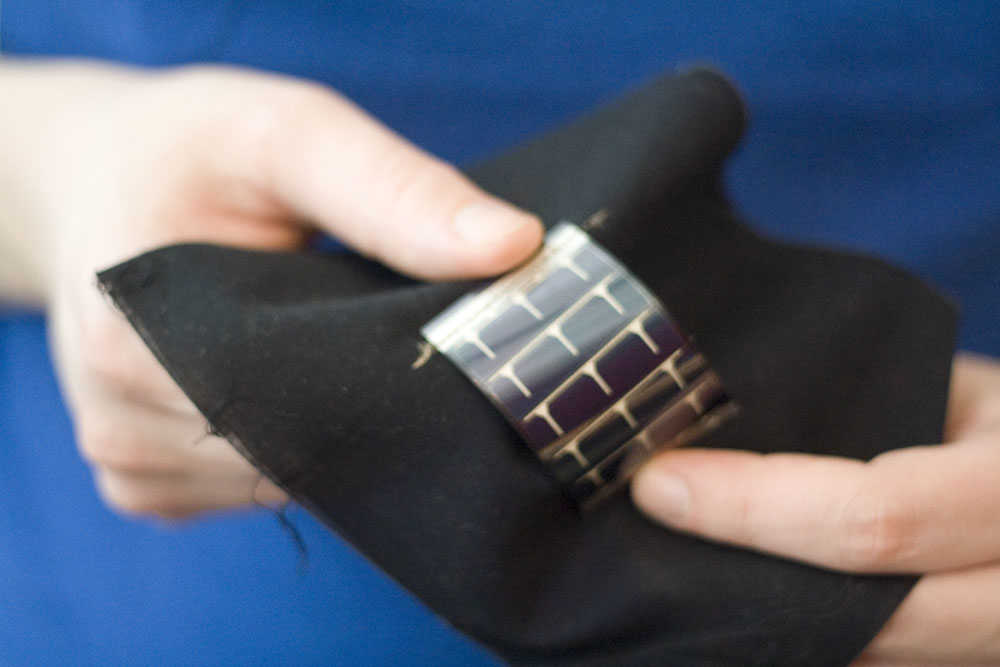
Flexibility, washability and stretchability are generally pretty important for clothing comfort, so it would be nice to have power supplies that don't involve strapping a kilo of battery to your body. A friendly way to power mobile contraptions is with solar panels, which now come in all kinds of flexible shapes and sizes.
-
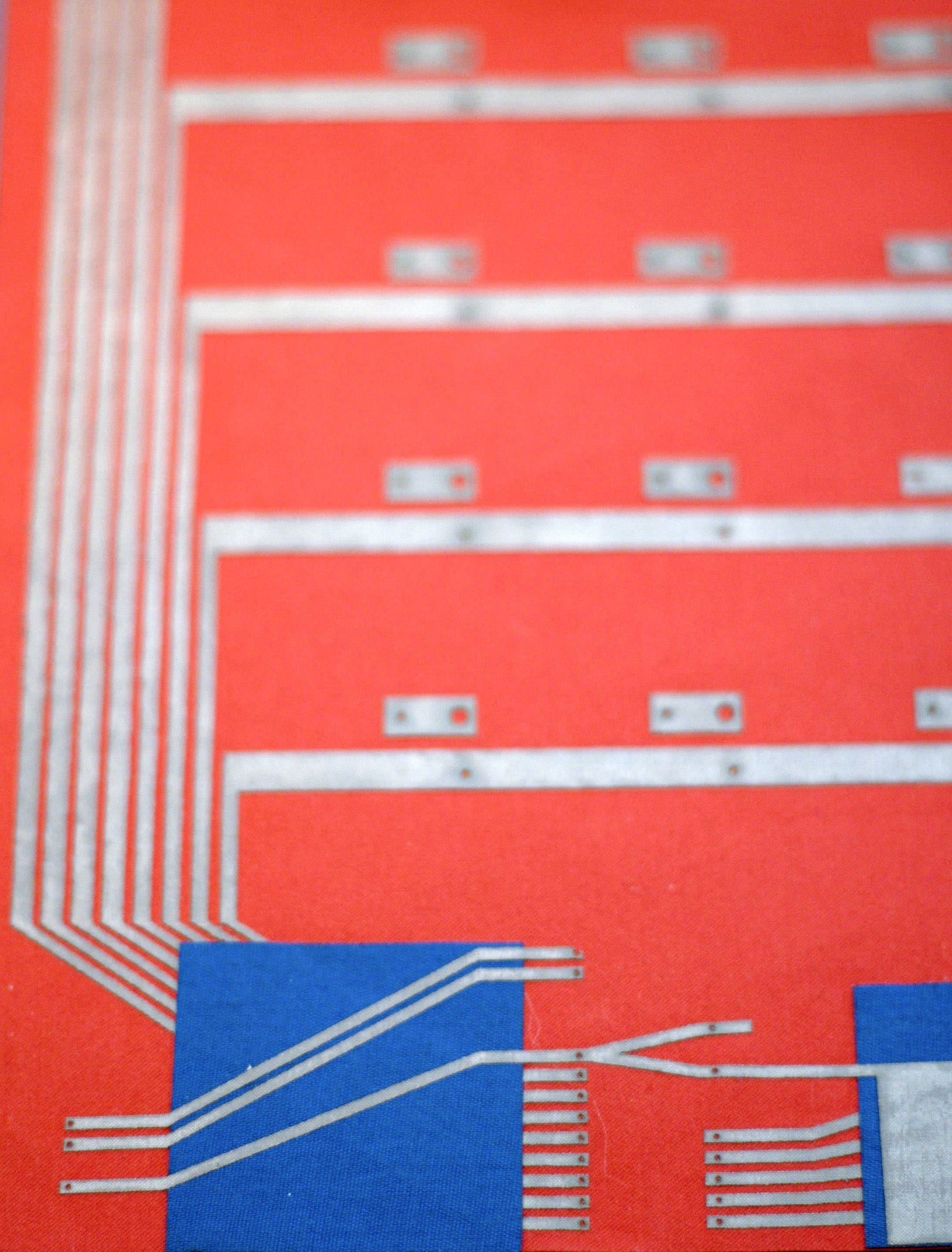
Laser cut flexible washable circuit-
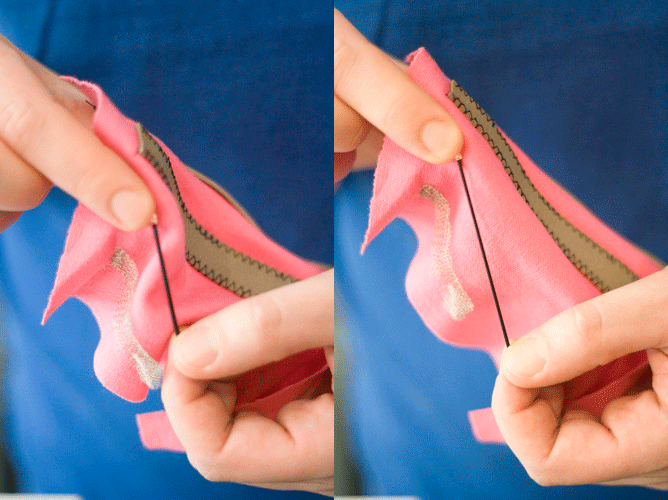
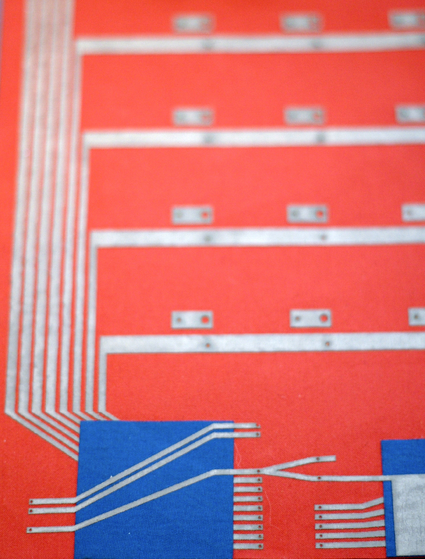
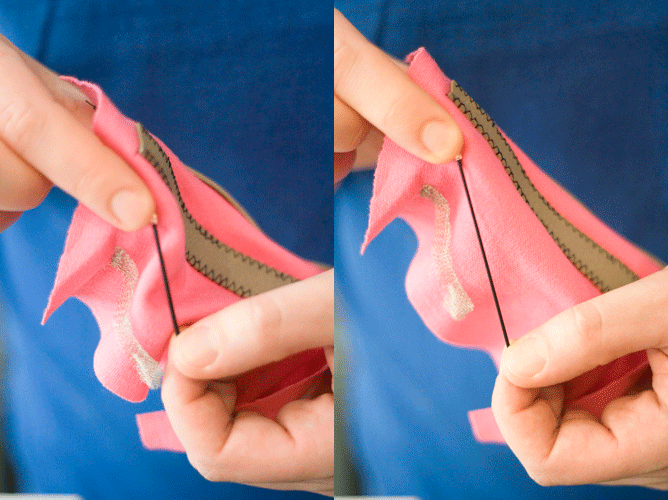
To maintain a flexible design, the actual circuit traces need to be flexible too. Conductive fabric can be laser cut into the circuit design and glued onto the clothing, or traces could be sewn in with conductive thread.
-
Knitted stainless steel as a cheap sensor-
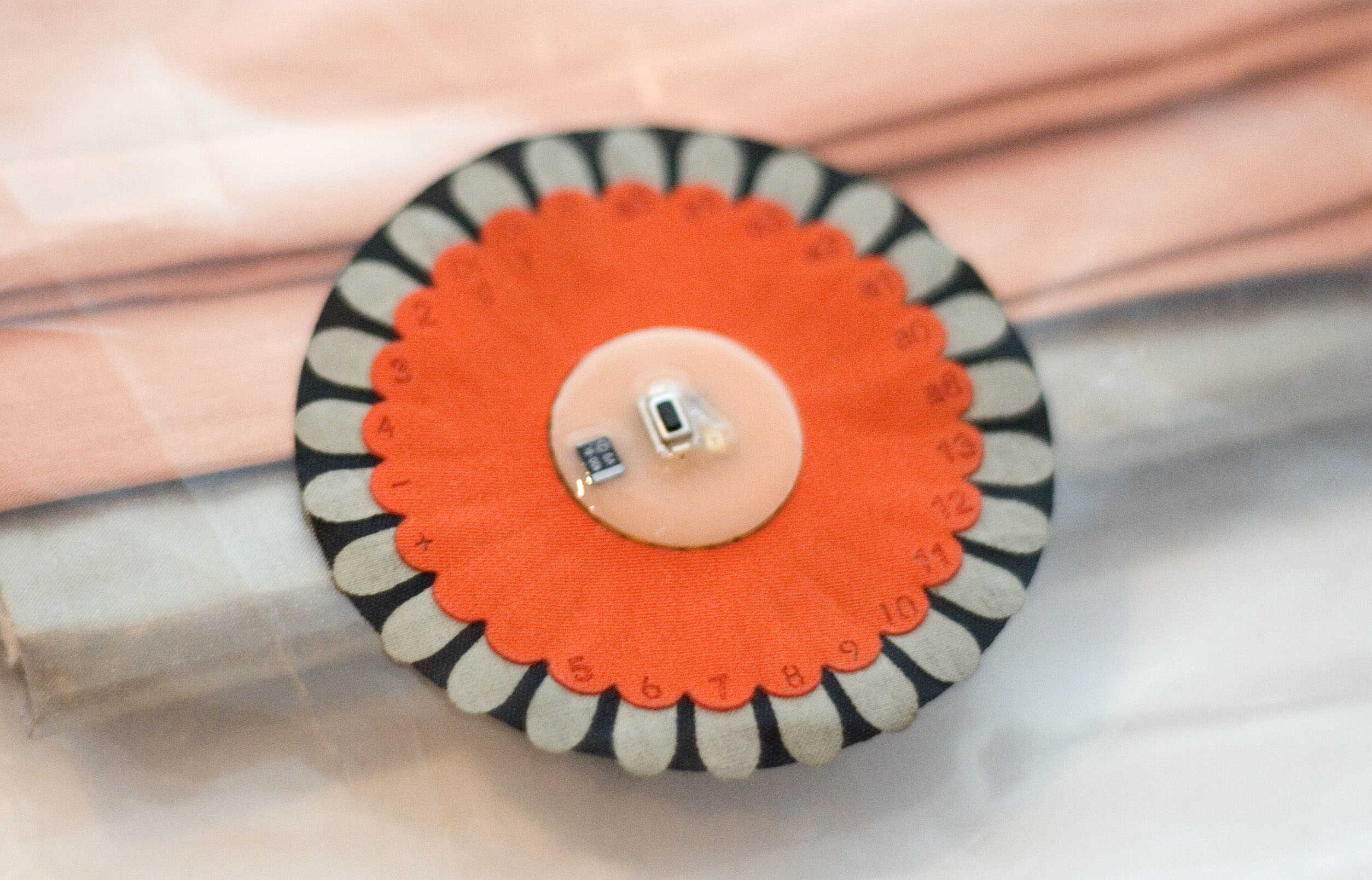
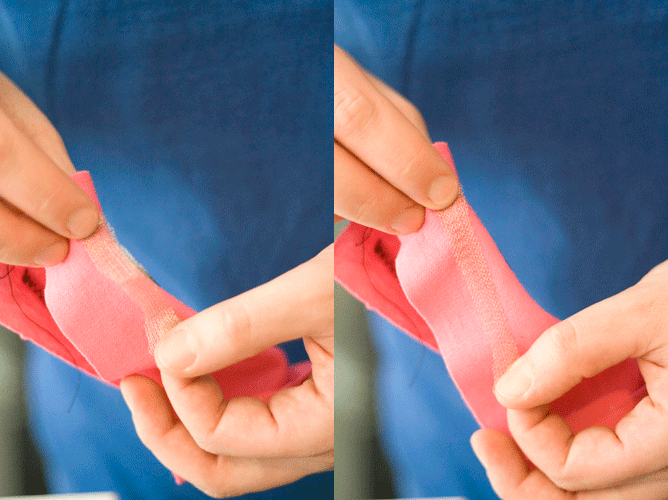
Some of these sensors are pretty expensive, but you can also make nice sensors yourself by examining different properties of cheaper materials: if you stretch some knit stainless steel, it will become more conductive due to each row making better contact. You can make squishy switches by putting some aluminum foil on either side of a sponge with some holes. It all depends on the projects you want to be doing...
Contributions
Comments (1)
Comments (1)
Nadya
Leah
Johannes
Titus
Seppe
Dima
Sandra
Anouk
Dana
Jean
Caspar
Daria
Deborah
Esther
Sean
Luís
Fábio
a3
Richard
Arjan
SUPER SUITS BY CHICKS ON SPEED WITH MODUL8 / HANGAR
We just developed some super suits last week @ hangar in Barcelona with modul8 friends,
the dresses have inbuilt sensors that trigger sound and video. It'll be interesting to try some of these more conductive fibres out at our next workshop.
Alex